Keynote Speakers

Keynote Speakers — AIGS 2027

Distinguished Experts Advancing Artificial Intelligence, Smart Technologies, Green Energy, and Sustainability

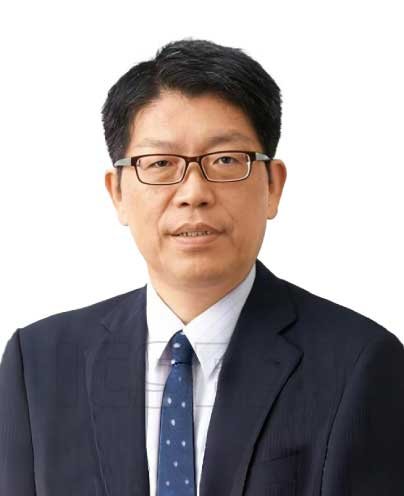
Prof. Tomonobu Senjyu

Prof. Tomonobu Senjyu

Ph.D., IEEE Fellow, IEEJ Fellow

Professor of Electrical and Electronics Engineering

Head, Power Energy System Control Laboratory (PESC)

University of the Ryukyus
Okinawa, Japan

View Academic Profile
Keynote Presentation

Techno-Economic Optimization of Integrated Renewable Energy Systems: Innovations and Pathways Toward Net-Zero Emissions

Abstract

The increasing penetration of renewable energy sources into electrical power networks has introduced a number of technical and economic problems arising principally from the variability of energy production, the diversity of generating technologies, and the requirements of maintaining a satisfactory balance between supply and demand. The combination of renewable generation with electrical and hydrogen energy storage offers considerable possibilities for improving system operation and reducing dependence upon conventional generating resources. The determination of suitable system configurations and operating conditions, however, requires the simultaneous consideration of technical performance, investment expenditure, operating costs, and environmental effects.

This study considers the techno-economic modeling and multi-objective optimization of an integrated energy system comprising solar and wind generation, electrical energy storage, hydrogen production by electrolysis, hydrogen storage, and fuel-cell generation. A mathematical representation of the principal system components is employed together with an intelligent control arrangement to examine their combined operation under different technical and economic conditions. The optimization procedure considers operating costs and carbon dioxide emissions as principal objectives, while accounting for the characteristics and operating constraints of the individual energy resources.

The application of the proposed approach to the Iowa 240-bus power system in the United States indicates the potential advantages of coordinated renewable energy integration. The reported results show annual savings of $126,147.8 and a reduction of 951,035.6 kg in carbon dioxide emissions relative to the base case, corresponding to reductions of 10.3% in annual costs and 100.5% in annual emissions. These results demonstrate the importance of considering the interactions among renewable generation, energy storage, and conversion technologies when evaluating alternative energy system configurations.

The study further discusses the practical significance of mathematical modeling, intelligent control, and multi-objective optimization in the planning and operation of integrated energy infrastructures. Particular attention is given to the technical and economic considerations governing the selection and coordination of different energy resources and their possible contribution to the development of low-carbon power systems.


Prof. Marc A. Rosen

Prof. Marc A. Rosen

Ph.D., P.Eng., FRSC, FEIC, FCSME, FASME, FIEF, FCAE, FCSSE

Professor of Mechanical and Manufacturing Engineering

Past President, Engineering Institute of Canada (EIC)

Ontario Tech University

Ontario, Canada

View Biography
Keynote Presentation

Energy Sustainability: Contributions of Buildings and Communities

Abstract

Sustainability and sustainable development are important goals for human and societal activity. Energy sustainability is of great importance to any activities and plans for overall sustainable development, and the achievement of sustainability. This is particularly important given the pervasiveness of energy use throughout almost all aspects of societies and the lives of people and the importance of energy in economic development of societies and the living standards attained by people, in addition to the significant impacts that energy processes and systems have on the environment and the ecosystems within them.

Many factors that need to be considered and appropriately addressed in moving or shifting towards energy sustainability are examined in this talk. These include appropriate selection of energy resources bearing in mind sustainability criteria, facilitation of the use of sustainable energy resources particularly through the use of appropriate energy carriers, enhancement of the efficiency of energy-related processes, and a holistic adoption of environmental stewardship in energy activities. In addition, other key sustainability measures are addressed, such as economics, equity, land use, lifestyle, sociopolitical factors and population, and examples of energy sustainability measures are described.

Finally, the talk focuses on the important contributions that buildings and communities can make towards achieving energy sustainability. This is important given that, in most countries, buildings are responsible for 30-40% of national energy usage.

Prof. Katja Andrea Rösler

Prof. Katja Andrea Rösler

Dr.-Ing., Dipl.-Math.

Professor of Automotive Engineering

Specialist in Vehicle Dynamics, Intelligent Mobility and Safety

Ruhr West University of Applied Sciences

Mülheim an der Ruhr, Germany

View Biography
Keynote Presentation

Who Is Mobility AI Designed For? Bias, Safety and Inclusion Across Smart Transport Systems

Abstract

The increasing application of artificial intelligence (AI) in mobility and transport systems raises important questions concerning the representation of different population groups and the extent to which data-driven decisions reflect their mobility needs. While AI-based models are increasingly employed to improve transport efficiency, accessibility, safety, and sustainability, their outcomes depend substantially upon the quality and composition of the underlying datasets. In particular, imbalances in demographic representation may introduce systematic biases that affect how mobility services are planned, evaluated, and delivered.

This keynote examines the relationship between data representation, algorithmic fairness, and inclusive mobility planning, with particular emphasis on gender-related disparities in transport and safety datasets. Drawing upon open mobility data, sectoral statistics, and AI-supported scenario modeling, the presentation considers how differences in gender representation can influence accessibility assessments, safety evaluations, and transport optimization outcomes. Attention is given to the comparison of balanced and empirically observed data distributions, as well as to the implications of these differences for the reliability and fairness of AI-based mobility models.

The discussion further addresses the practical challenges of identifying and mitigating demographic bias in intelligent transport systems without compromising operational efficiency. By examining the relationship between data balance, model performance, and the mobility requirements of different user groups, the keynote considers the conditions under which AI-supported transport planning may contribute to safer, more equitable, and sustainable mobility systems. Particular emphasis is placed on the responsibility of researchers, transport planners, and technology developers to ensure that advances in mobility intelligence serve the diverse populations for whom these systems are intended.

Dr. Mir Sayed Shah Danish

Dr. Mir Sayed Shah Danish

Ph.D., D.Eng., MBA, CEng, SMIEEE, MIET

Research and Innovation Chair
Research and Education Promotion Association (REPA) LLC

California, USA


Founding Chair
IEEE Sustainable Energy and Intelligent Engineering Society (SEIES) Chapter

Okinawa, Japan


Technical Evaluator (Part-time/Online)
Sustainable Energy Authority of Ireland (SEAI)

Dublin, Ireland

View Biography
Keynote Presentation

The Science and Engineering of Solar PV System Design: From Principles to Practice

Abstract

The design of a solar photovoltaic (PV) system involves a series of technical and engineering considerations, each of which has a direct bearing upon the performance, reliability, and economy of the installation. A satisfactory design requires not only an understanding of the operating characteristics of photovoltaic modules and associated equipment, but also a systematic assessment of the electrical load, local solar radiation, environmental conditions, and requirements of the proposed installation.

This keynote addresses the principal stages in the engineering design of solar PV systems, with particular attention to the determination of energy requirements, estimation of available solar resources, selection and sizing of PV modules and inverters, arrangement of the PV array, and calculation of the principal electrical parameters. Consideration is also given to system losses, protection requirements, and the estimation of electrical energy production under practical operating conditions.

The presentation follows the principal engineering calculations and design decisions involved in a representative grid-connected PV installation, illustrating the relationship between theoretical considerations and their application in practice. Particular emphasis is placed upon the assumptions, technical constraints, and engineering judgments that must be considered in arriving at a suitable system configuration. The discussion is intended to provide an integrated account of the essential design procedure within the scope of a conventional solar PV installation.


Archive of Academic Talks

Previous Academic Presentations (Archive)

Prof. Marc A. Rosen

Ph.D., P.Eng., FRSC, FEIC, FCSME, FASME, FIEF, FCAE, FCSSE

Professor of Mechanical and Manufacturing Engineering

Past President, Engineering Institute of Canada (EIC)

Ontario Tech University

Ontario, Canada

View Biography

Energy Sustainability: A Crucial Path to Sustainable Development and Sustainability

Abstract: Sustainable development is a fundamental objective for human and societal progress, with energy sustainability serving as a central pillar for achieving long-term environmental and economic stability. This keynote examines the critical role of energy in modern societies, emphasizing its influence on economic development, quality of life, and environmental impact.

The presentation explores key factors required to transition toward sustainable energy systems, including appropriate energy-resource selection, sustainable energy carriers, and improved energy conversion and utilization efficiency. It also highlights the importance of integrating environmental stewardship into energy planning and operations.

Broader sustainability dimensions, including economics, equity, land use, lifestyle, sociopolitical factors, and population dynamics, are also discussed. Practical examples and strategic pathways are presented for advancing energy sustainability and sustainable development.


Dr. Mir Sayed Shah Danish

Ph.D., D.Eng., MBA, CEng, SMIEEE, MIET

Research and Innovation Chair
Research and Education Promotion Association (REPA) LLC

California, USA


Founding Chair
IEEE Sustainable Energy and Intelligent Engineering Society (SEIES) Chapter

Okinawa, Japan


Technical Evaluator (Part-time/Online)
Sustainable Energy Authority of Ireland (SEAI)

Dublin, Ireland

View Biography

AI-Driven Machine Learning Framework for Optimizing Emissions & Energy Efficiency in Power Plants

Highlights

  • 2.23% higher power output: AI-driven optimization algorithms increased modeled CCPP generation from 452 MW to 462.1 MW, achieving a 10.1 MW improvement.
  • 94.46% goodness-of-fit: Machine learning-based forecasting demonstrated strong predictive performance for power-generation modeling and operational optimization.
  • AI-optimized NOx conditions: Intelligent neural-network models identified PGTE = 17.844 mbar and CNOx = 78.66 mg·m−3 for the modeled gas-turbine operating conditions.
  • Intelligent operational optimization: Machine learning algorithms and historical plant data enable predictive analytics, intelligent forecasting, and rapid operating-scenario evaluation.
  • AI-based environmental assessment: Data-driven sensitivity analysis identified turbine inlet temperature and ambient pressure as key variables influencing NOx emissions.

Abstract

This keynote presents practical applications of AI, machine learning, and intelligent optimization algorithms for improving power generation, operational efficiency, and emissions management in real-world combined-cycle power plants (CCPPs). Drawing on historical operational data and published research, the approach integrates AI-driven predictive modeling, thermodynamic analysis, and data-driven optimization to support intelligent engineering decisions. One study demonstrated a 2.23% increase in modeled power output, from 452 MW to 462.1 MW, while a complementary investigation using four years of operational data from a 150 MW gas-turbine plant in Türkiye identified optimized operating conditions for nitrogen oxides (NOx) management. These findings highlight the potential of machine learning algorithms, intelligent forecasting, and AI-enabled decision-support systems to improve power-plant performance, support emissions control, and advance efficient and sustainable energy generation.